


As immersive entertainment continues to evolve, terms like 3D, 4D, 5D, 7D, and 9D cinema are widely used across cinemas, amusement parks, and VR experience centers. However, many people are still confused about what these formats actually mean and how they differ from each other.
This guide clearly explains the differences between 3D, 4D, 5D, 7D, and 9D cinema, how each stage evolved, and why 9D VR cinema has become the most advanced and practical solution today.
What Does “D Cinema” Mean
The “D” in cinema is not a scientific measurement. Instead, it is an industry and marketing-based classification used to describe how many layers of immersion are added to the movie experience.
These layers typically include:
- Visual depth
- Physical motion
- Environmental effects
- Interaction
- Virtual reality immersion
As more layers are added, the cinema experience moves from passive viewing to full participation.
3D Cinema: Visual Depth Begins
3D cinema is the foundation of immersive cinema.

Key Features:
- Stereoscopic projection
- 3D glasses
- Visual depth perception
Experience:
Viewers perceive distance and depth, but there are no physical or interactive effects.
Typical Applications:
- Commercial movie theaters
- Entry-level immersive cinemas
🔗 Related article: What Is 3D Cinema
4D Cinema: Motion and Physical Effects
4D cinema builds on 3D by adding physical sensations.

Key Features:
- Motion seats
- Wind, vibration, water spray
- Environmental effects synchronized with the movie
Experience:
Viewers not only see the movie but also feel movement and environmental changes.
Typical Applications:
- Theme parks
- Tourist attractions
🔗 Related article: What Is 4D Cinema
5D Cinema: Interaction Enters the Scene
5D cinema introduces audience interaction, turning cinema into a game-like experience.
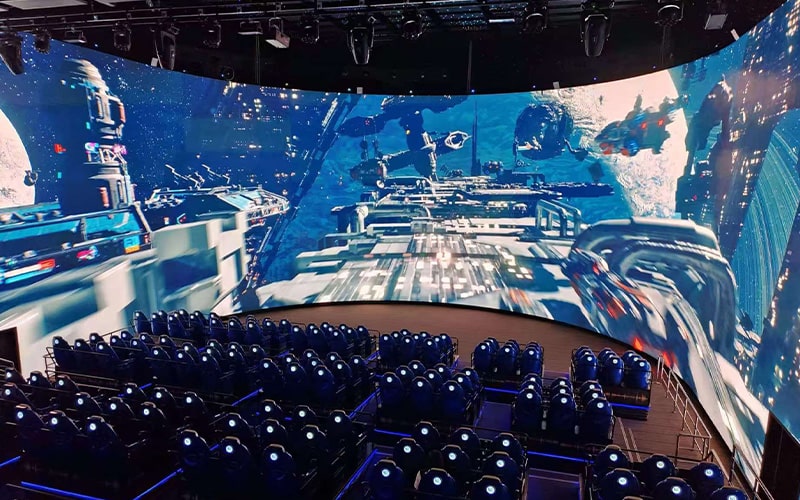
Key Features:
- 3D visuals
- Motion seats and effects
- Interactive shooting systems
Experience:
Viewers actively participate by shooting targets and receiving scores.
Typical Applications:
- Family entertainment centers
- Shopping malls
🔗 Related article: What Is 5D Cinema
7D Cinema: Competitive and Multiplayer Immersion
7D cinema enhances interactivity and realism.

Key Features:
- Advanced shooting systems
- Multiplayer competition
- Stronger motion and effects
- Real-time scoring and feedback
Experience:
A high-intensity, competitive experience with strong replay value.
Typical Applications:
- VR zones
- Indoor amusement parks
🔗 Related article: What Is 7D Cinema
9D Cinema: Full VR Immersion
9D cinema represents the highest level of immersive cinema.

Key Features:
- VR headsets instead of screens
- 360-degree virtual environments
- Motion seats synchronized with VR content
- Compact equipment design
Experience:
Viewers are fully inside a virtual world, free to look around and feel every movement.
Typical Applications:
- Shopping malls
- VR experience stores
- Small entertainment venues
🔗 Related article: What Is 9D Cinema
3D vs 4D vs 5D vs 7D vs 9D: Quick Comparison
Cinema Type
Visual Depth
Motion Effects
Environmental Effects
Interaction
VR Headset
3D Cinema
✓
✗
✗
✗
✗
4D Cinema
✓
✓
✓
✗
✗
5D Cinema
✓
✓
✓
✓
✗
7D Cinema
✓
✓
✓
Advanced
✗
9D Cinema
✓ (VR)
✓
✓
Optional
✓
Why 9D Cinema Is the Most Practical Choice Today
Among all cinema types, 9D cinema offers the strongest immersion with the smallest space requirement.
Key advantages include:
- No large screen or projection room needed
- Very compact footprint
- Strong attraction for walk-in customers
- Fast installation and ROI
- Ideal for small and medium businesses
This is why 9D VR cinema has become the dominant trend in immersive entertainment.
Our VR Cinema Equipment Solutions
As a professional VR equipment factory, we specialize in compact, high-performance 9D VR cinema systems, including:
- VR Five Seat Flying Saucer
- 9D Track Cinema
- 9D VR Egg Chairs
- VR Six Axle Racing Simulator
- Other VR equipment


We provide one-stop solutions, from manufacturing to installation support, helping operators launch profitable VR cinema businesses with minimal space and fast returns.


