

3D cinema is one of the earliest and most recognizable forms of immersive visual entertainment. Unlike traditional 2D films, which appear flat, 3D cinema creates the illusion of depth, making objects look closer, farther away, or even as if they are coming out of the screen. This technology changed the movie-viewing experience long before today’s interactive and VR-based systems became popular.
What Is 3D Cinema
3D cinema refers to films created and projected in a way that gives viewers a stereoscopic visual effect, meaning the images appear to have 3D cinema refers to a movie projection system that delivers stereoscopic images. When wearing 3D glasses, viewers see two slightly different images—one for each eye. The human brain merges them into a single picture with realistic depth.
This is why a 3D movie feels more vivid and lifelike compared with a standard 2D film.
Common visual effects include:
- Objects appearing to float in front of the screen
- More accurate perception of space and distance
- Enhanced realism during action or animation scenes
3D remains widely used because it is an effective way to enhance visual storytelling without requiring extra physical effects.

How Does 3D Cinema Work
3D cinema relies on three core components working together:
1. Stereoscopic Film Content
The movie is recorded or rendered using two synchronized perspectives—similar to left-eye and right-eye vision. These dual images are essential for generating the depth effect.
2. 3D Projection System
Cinemas typically use:
- Two projectors displaying separate images, or
- A single digital 3D-capable projector using polarization or active shutter technology
The system ensures each version of the image is correctly projected onto the screen.
3. 3D Glasses
The audience wears glasses that filter the images so each eye receives the correct frame.
Your brain then combines them into one image with depth, which creates the three-dimensional effect.
This process is simple but highly effective, which is why 3D cinema has been adopted worldwide.
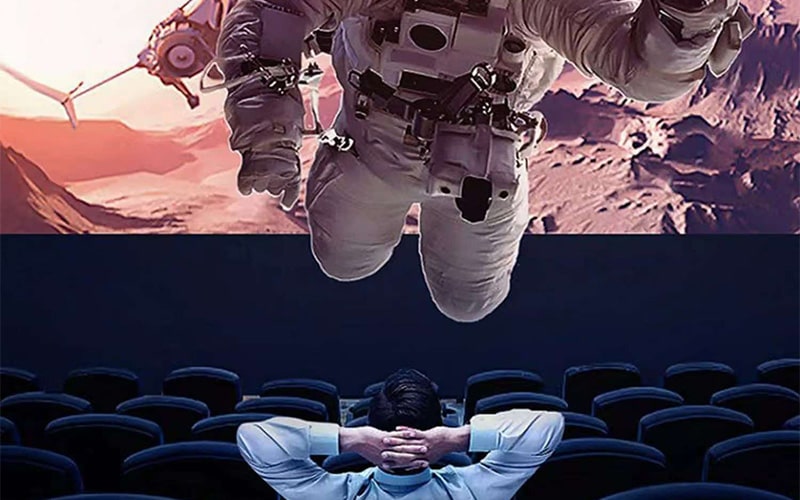
Benefits of 3D Cinema
- Enhanced visual immersion
The added depth makes scenes feel more dynamic and engaging. - Ideal for action, animation, and fantasy genres
Rapid movement and detailed environments become much more striking in 3D. - Mature, stable, and widely available technology
3D does not require complex environmental setups, making it accessible for many theaters and entertainment venues. - Cost-effective upgrade
Compared with systems that need motion seats or environmental effects, 3D cinemas offer improved visuals with relatively lower investment.
How 3D Cinema Fits Into the Evolution of Immersive Entertainment
3D cinema marked the beginning of dimensional movie experiences. As audiences sought more dynamic sensations, new formats gradually emerged—first adding motion seats and physical effects, then progressing toward interactive and VR-based systems.
The next stage after 3D is 4D cinema, which adds motion and environmental effects to enhance immersion.
Up Next: What Is 4D Cinema
Now that the foundation of 3D cinema is clear, the next article in this series will explore What Is 4D Cinema, explaining how motion, wind, vibration, and atmospheric effects turn a simple visual experience into a multi-sensory one.