
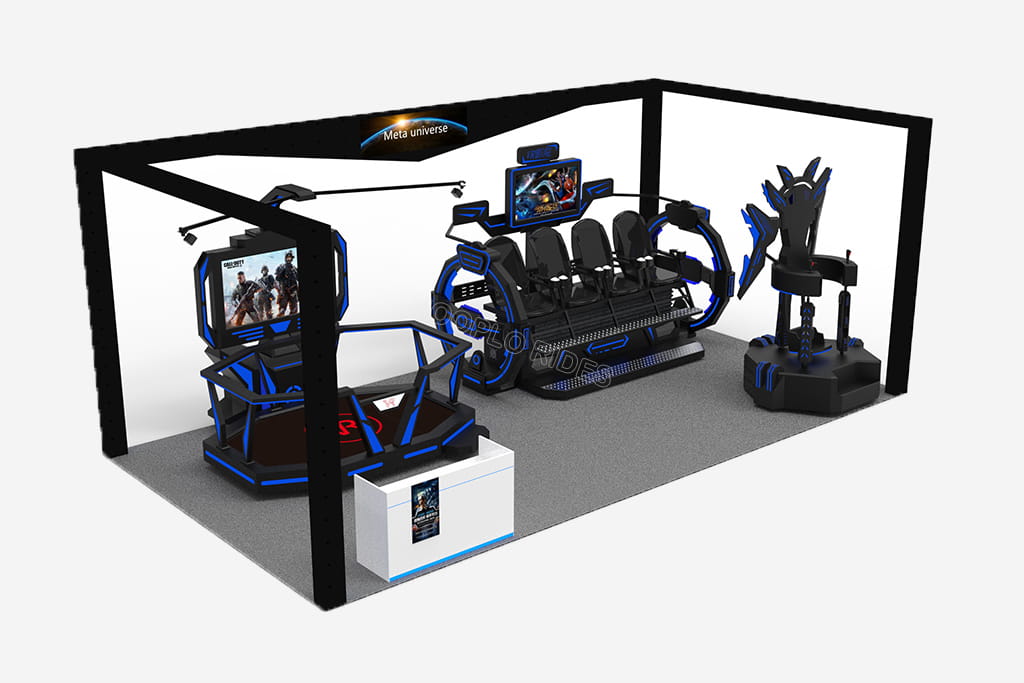
Starting a VR business has become an attractive opportunity for entrepreneurs who want to enter the entertainment industry. With the rapid growth of virtual reality technology, VR experiences are now widely used in shopping malls, amusement parks, family entertainment centers, game centers, and tourist attractions.
However, before investing, many business owners have the same questions:
How much money do I need to start a VR business?
What equipment should I buy?
How much revenue and profit can a VR arcade generate?
The answer depends on your business model, location, equipment scale, and target customers. This guide will help you understand the typical investment costs and potential returns of starting a VR business.
1. Different VR Business Models Require Different Investments
The first step is deciding what type of VR business you want to operate. A small VR experience booth requires much less investment than a complete VR arcade.
Common VR business models include:
| Business Model | Suitable Locations | Estimated Investment |
|---|---|---|
| Small VR Experience Booth | Shopping malls, cinemas, tourist attractions | $5,000 – $20,000 |
| Small VR Arcade (3-5 VR Machines) | Game centers, entertainment venues | $20,000 – $50,000 |
| Medium VR Center (5-15 VR Machines) | Shopping malls, FECs, commercial spaces | $50,000 – $150,000 |
| Large VR Theme Park | Amusement parks, tourism projects | $150,000+ |
For most first-time investors, starting with a small or medium-sized VR arcade is usually a more practical choice because it requires manageable investment while allowing room for future expansion.
2. Main Costs of Starting a VR Business
The total investment is not only the cost of VR equipment. A complete VR business usually includes equipment, venue preparation, rent, decoration, staff, and marketing.
Estimated Initial Investment Breakdown
| Expense Category | Estimated Cost |
|---|---|
| VR Equipment | $15,000 – $100,000 |
| Venue Decoration | $5,000 – $30,000 |
| Rent Deposit | $3,000 – $20,000 |
| Furniture & Accessories | $1,000 – $10,000 |
| Licenses & Insurance | $500 – $5,000 |
| Marketing & Promotion | $1,000 – $10,000 |
| Staff Training & Initial Operation | $2,000 – $10,000 |
| Total Estimated Investment | $30,000 – $150,000+ |
Among all expenses, VR equipment is usually the biggest investment. Choosing reliable commercial VR machines is important because equipment quality directly affects customer experience, maintenance costs, and long-term profitability.
3. How Much Can a VR Business Earn?
The revenue of a VR business mainly depends on:
- Number of VR machines
- Daily customer traffic
- Average ticket price
- Operating hours
- Location quality
A commercial VR machine can usually serve multiple customers every day. Popular VR attractions such as VR simulators, VR racing simulators, VR shooting games, and VR motion rides can attract customers who are looking for immersive entertainment experiences.
Estimated Monthly Revenue Example
Assume a VR arcade has 5 VR machines:
| Item | Calculation | Amount |
|---|---|---|
| Number of VR Machines | 5 units | 5 |
| Average Price Per Experience | $8/person | $8 |
| Average Customers Per Machine Per Day | 8 people | 40 customers/day |
| Daily Revenue | 40 × $8 | $320 |
| Monthly Revenue (30 days) | $320 × 30 | $9,600 |
A better location with higher customer traffic can generate significantly higher revenue.
4. Potential Profit of a VR Business
Revenue is only one part of the business. The actual profit depends on operating costs such as rent, salaries, electricity, maintenance, and marketing.
Example Monthly Profit Calculation
| Item | Monthly Amount |
|---|---|
| Revenue | $9,600 |
| Rent | -$2,000 |
| Staff Cost | -$1,500 |
| Electricity & Internet | -$300 |
| Maintenance & Other Costs | -$500 |
| Marketing Expenses | -$500 |
| Estimated Monthly Profit | $4,800 |
Based on this example, the investment recovery period could be around 8-18 months, depending on the location, equipment quantity, and business operation.
5. Factors That Affect VR Business Profitability
Although VR businesses have attractive profit potential, success depends on several important factors.
Location
A high-traffic location usually means more customers. Shopping malls, tourist areas, cinemas, and family entertainment centers are popular choices.
Equipment Selection
Commercial VR equipment should be durable, easy to operate, and suitable for continuous daily use. Poor-quality equipment may increase maintenance costs and affect customer satisfaction.
Game Content
Customers are more likely to return when there are exciting and updated VR experiences. Offering different types of VR attractions helps attract various customer groups.
Business Scale
Starting small allows you to test the market. After building stable revenue, adding more VR machines can increase income.
6. Why Choose Commercial VR Equipment for Your Business?
Compared with traditional entertainment products, VR attractions provide an immersive experience that combines technology and entertainment. This makes them highly attractive to modern customers.
Commercial VR equipment offers advantages such as:
- High customer engagement
- Multiple revenue opportunities
- Compact space requirements
- Easy operation
- Strong repeat attraction
At Hooplo VR, we provide complete VR business solutions, including VR simulators, VR rides, VR racing simulators, and arcade VR equipment. From equipment selection and customized design to shipping support, we help entrepreneurs build profitable VR entertainment projects worldwide.
Start Your VR Business with a Clear Investment Plan
Starting a VR business does not always require a huge budget. A small VR experience project can start with several thousand dollars, while a professional VR arcade may require a larger investment for better customer experience and higher revenue potential.
Before investing, carefully evaluate your location, target customers, equipment selection, and operating strategy.
With the right planning and reliable VR equipment, a VR business can become a profitable entertainment opportunity.